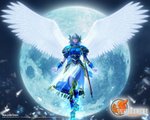

I believe that 'St. Valentine's Day' is more apt than Valentine's Day to me because of the connotation of suffering and martyrdom. Love is not a painless business, and the ability to love requires willingness to sacrifice to some extent, even if sacrifices involve trivialities.
In some cases, however, the sacrifice that is required is the willingness to surrender to the ultimate reality of loss. Those whom we love, whether they are human beings or beloved pets, are doomed to death at some point.
Again and again, friends of mine who have experienced a pet's death have declared that they never wanted another animal because they couldn't bear the pain of that sort of loss again. To me, this is tantamount to renunciation of life itself. If you shield yourself from all relationships or emotions that could cause pain, you become less than human. Cut yourself off from the pain of loss and you cut yourself off from the joy of love.
I wanted to do something creative for St. Valentine's Day. I have spent little time in Second Life this past year, but it is on the occasions of any holiday or festival that Second Life displays its greatest capacity to express beauty and ritual. I therefore decided to create a little video that would tell a tale of love, using two avatars that I created myself. The setting is one of my favourite castles by Second Life castle-builder Wolves Bain. The castle's name is 'The Awakening'. Wolves Bain created his own story for the Awakening, as he does for every castle he builds, but I borrowed from his concept a little to create my own St. Valentine's Day tale.
I gave the male avatar the name Attis because he exists as a symbol of love and therefore resembles the ancient god who sacrificed his life each year for the rebirth of the earth. Another reason for naming him is that Attis became neither male nor female through his sacrifice. As I am a woman, my avatars cannot be truly male. It is fitting that my sole 'male' avatar should be named Attis.
Showing posts with label Second Life. Show all posts
Showing posts with label Second Life. Show all posts
Sunday, February 15, 2009


Saturday, August 9, 2008
Coming Home at Last

.bmp)

In the past month, my laptop has given me far more headaches and heartaches than pleasure. With the original Vista system, it never was problem-free, but in the past month, some programme continually blocked wireless access. Days with technical assistance failed to solve the problem. The only solution was a 'Recovery', a rather sad euphemism for total Destruction.
Of course, they tell you breezily that all you have to do is back-up your files, but this simple direction conveys nothing of the hours wasted in backing up files and then, after the 'Recovery' or rather Rebirth of the system, being forced to reinstall all programmes again.
I hate the entire business of computer Recovery, so I dragged my feet, trying to find a less radical solution. I finally went through it yesterday. To my delight, the wireless connection reappeared, and trusting as I am, I proceeded to reinstall all my programmes and transfer all my files back onto the laptop.
I awakened this morning to find that the wireless connection once again had ceased to exist. Some arcane working of Windows was blocking it in such a fashion that I could not even find anything connected with it in my system.
Anyway, I now have installed the Service Pack 1, in the hope that my laptop will function properly again, but I am not going to reinstall all my programmes or transfer my files until a day or two has passed.
One programme I had missed greatly in the past month or so was Second Life. I did install it yesterday after the first Recovery but was so exhausted that I only logged in and out without spending any time there.
This afternoon, after the second Recovery in two days, I visited my skybox. It is incredible how something that exists only in a virtual reality can bring one a tremendous sense of quietude and peace. The sound of the water lapping gently in my indoor pool and the reflection of the sunrise in the windows as well as the flaring of the torches combined to bring me a little ease from pain, fatigue and frustration.
Beyond that, there is a true sense of coming home. This is Freyashawk's home, the home of a part of my soul that is given little space to breathe in reality. I do not wish to DO anything but meditate quietly here, watching the pattern of the sun's light as it changes, and listen to the sounds of the water and the distant howling of my wolf on the land below.
In Second Life, I have a little Empire of my own that includes a small ship and a number of castles as well as a garden complete with gazebo, peacocks, waterfalls and wolf. I can float on a raft in the water next to my ship or feed my paired black swans. I can build a sandcastle or build a large castle if I feel creative or energetic or I can stand on my bridge and watch the tiny glowing fairy flit through the air nearby as the trees stir in the breeze and night falls over the land.
Best of all perhaps is my cat in Second Life who responds to my call and will follow me wherever I go, purring lovingly. I can enjoy the beauty of solitude with the affection of my pets.
Yes, it is fantasy but it actually does calm the spirit and engage the heart a little. One creates real memories and moments in Second Life can be treasured forever in real life.
If my laptop bedevils me again, at least I have experienced something positive again that could not exist without computer technology. Perhaps that will inspire me to continue the struggle with these endless updates and the tangle of programmes constantly assaulting the fragile little citadel that holds my data.
Saturday, March 22, 2008
Freyashawk's Promise and Hope

I believe that Coleridge would have loved Second Life. The palaces of Kubla Khan are only as far away as an artist's determination.
It is the day before Easter, a day when hope in its ultimate manifestation is celebrated throughout the world. It is the return of the dead to life and the promise of rebirth.
Next to the stairs, a dove sits on her nest in the 'real' world. I hope she has eggs there and that they will hatch safely. The male is vigilant and the two take turns upon the nest. It is interesting to discover that each bears the vigil in a different way. In turn, one sits facing the east and the other sits facing the west. They are extremely devoted. In a sudden bitter frost last night, she maintained her position. Of course, were she not to do so, there would be no life in the eggs.
I wrote a story about Hope some time ago and gave it to a friend in Second Life. He built a magnificent castle based on the tale I wrote. When he set it for sale, he announced that he would donate all proceeds to the 'Relay for Life' Charity.
The artist is Wolves Bain. I have written about his work in my 'Artists in Second Life' webpage. His wife is a cancer survivor herself. Second Life can be seen as an escape from reality but at the same time, there are many there who work with fantasy for real causes to help others. Art always has been a powerful tool for good or for ill.
I feel that my own life has been enriched by my encounters with artists like these. In the end, real hope is found not in a story or in a castle but in the examples of others.
Certainly that is one of the reasons that the story of the Christ remains so powerful after two thousand years. A man who willingly sacrifices all for the sake of humanity always appeals to the best in us, whether he be human or god or somewhere between the two.
My tale is not as inspiring, but I will share it nonetheless for the sake of the castle founded on it.
Freyashawk's Promise
I made a promise to a young boy... to deliver his people from oppression by taking the sacred relics of his ancestor to the top of the highest mountain. In an ancient legend, it was foretold that, should the bones of the Warrior Child be given a resting place on the peak of Mt. Petra, the earth itself would rise to throw off the yoke of those who had invaded and occupied the homeland.
I am a Valkyrie, and my duty is to the All-Father, to bring the souls of heroes to Valhalla that they might fight for the forces of good in the Last Battle. My duty is not to humankind. I am a servant of the gods.
And yet, when a young lad lay dying in a barren wasteland in a faraway land, his tears of despair pierced my heart. No trained warrior he, but the blood of ancient heroes ran in his veins and he had sacrificed his life to find the bones of his Hero ancestor that he might bring an old legend to life.
I flew to his side, though his soul was not destined for Odhinn. His purity and his determination drew me inexorably to him. His tears were not for himself. He had no fear of death, except that it would kill the quest to which he had given his own life. What possessed me then to take his task upon my own shoulders? His land is not my land. I cannot be tied to the causes of humans that shift from age to age.
Despite all this, I could not allow him to die in torment. I knew at once that only my promise to fulfil his quest would allow him to die in peace. The bones were wrapped in coarse homespun wool, the best this child had no doubt. As I accepted his burden, the boy surrendered at last to death, his soul finally at peace.
I traveled throughout the world, searching for one who could bring life again to an ancient legend.
Thus it was that I found the Wolves Bain, great among mortal builders, a fitting choice to build the shrine of the Ancient Warrior Child. The boy had told me the legend of his people, how the tomb had to be built of purest marble capped by a perfect dome.
When the shrine was completed, I saw it and knew my promise had been fulfilled. Nor is the shrine only a place only the bones of the Hero of old will bring forth hope for the oppressed. Beneath its foundations is a small chamber at the site of an ancient spring. There I myself laid the young boy to rest.
May his sacrifice not be in vain.
Saturday, February 23, 2008
Draumr Journals or Dream Journals


All through my childhood and adolescence, I kept journals. I usually kept a separate Dream Journal as well. Somehow, the discipline of that habit has deserted me in recent years. I always enjoyed them retrospectively, however and very often was inspired by thoughts or visions I had experienced in my dreams... Perhaps it is time to return to the discipline of writing about some of my more interesting dreams at least...
Last night in my dreams, I returned to Nepal. I was not living there, but was a visitor at a wedding of all things. It was a Western wedding, either American or British... possibly British. The kernel of this probably was a silly film I saw recently where a guy invented a bogus condominium in Nepal in order to appear a more fascinating character to a girl. Anyway, I shan't go through all the many details of the dream or the people with whom I was involved. They were friends, albeit not close friends. In some parts of the dream, I was at the age at which I lived in Nepal in my real life. In other parts of the dream, I seamlessly converted to adulthood.
What I enjoy most sometimes in my dreams are the cities and the incredible wealth of detail in shops and city streets. This dream was no different. I expect it was Kathmandu but it was a dream Kathmandu, quite unlike the real city I knew, although some of the shops were the same. In fact, in my dream, I asked about a shop that I knew when I was a child. It was named the 'Blue Bucket' and was run by some expats. They sold imported goods, among them Cadbury's Chocolates... In the dream, I asked a Nepalese shopkeeper about the 'Blue Bucket' but the guy was not familiar with the name.
In the dream, recent 'real' history had changed the city I had known and there were rebels and more Chinese influence than there had been in my time. I was supposed to be dressing for the wedding (where I was a guest) and to be interacting with the other wedding guests, but instead, I wanted to see the shops. It had been so long since I had been in Nepal, and it seemed inconceivable that, only being able to spend one day there, I would spend the whole day at the wedding and not even SEE the city I had loved as a child...
So I wandered the streets a little and marveled at the offerings at the shops and bazaars. Waggons and stalls had proliferated in the dream Kathmandu. Some of the goods were similar to the goods sold in the real Nepal, but others were strange and wonderful. In particular, I was interested in a construction that consisted of the head of a horse, transformed into a costume for a shaman or...? I wanted to buy it but it was extremely expensive. It seemed to me that it would be a very powerful item to have in spiritual terms, but I knew there would be problems with the customs authorities if they saw it...
My dreams tend to be very realistic! Why couldn't I simply snap my fingers and have the horse head masque sent miraculously to my own home in the dream? But no, I had to stand at the stall, gazing at it, wondering if I could take it through customs!
I knew in the dream that many people moreover would be revolted or appalled by this item that I found singularly beautiful and powerful. (In real life, I have many such items, from necklaces made from animal teeth to a wolfskin... I treat them all with reverence but many consider my shamanic tendencies 'politically incorrect'.
In any case, the dream progressed and there were many plot details that are not worth recounting here. What I wish to remember from this dream is the horse head and the city streets and stalls... Heaps of extraordinary items for sale, and buildings and constructions that sparked the imagination.
I expect that my dream of Nepal mirrored some of my feelings both about William Gibson's novels and Second Life. I feel that I was blessed as a child with the opportunity to travel through the world and to experience other cultures, to actually immerse myself in them to some extent. I never liked the idea of 'tours' because they are so superficial. I would rather travel to one spot and spend a month there than see a dozen cities in that space of time.
Yes, I do miss Nepal and I wish I could return for a visit. Perhaps the inspiration for this dream is a small segment on BBC news last night about current conflict in the southern part of Nepal with what the B.B.C. called an 'ethnic population' there. I wondered why they didn't specify the 'ethnic' group in question. The Newars are the ruling class in Nepal and indeed are the inhabitants of most of the big cities. The actual Nepalese could be considered an 'ethnic group' I suppose... If I really want to know more, I suppose I'll have to access more detailed news on the internet, but to what purpose really? I am thousands of miles from Nepal now, both geographically and in terms of my own life.
Nonetheless, I am going to search for the horse head masque that promised a new perception in the dream... or at the very least, a small window into a new reality.
It is an object that has great historical symbolism in myth, legend and fairytales.
There is the tale of the Goose Girl with her faithful horse. Killed by a jealous servant girl who took the place of the princess, the horse head remained sentient and was able to speak to the deposed princess to give her advice and to protect her from further evil. There is a similar Palestinian folktale actually. One version of the popular tale of Jbene features a faithful horse with the same fate and the same powers.
In ancient Celtic Europe, horses were sacrificed to the gods and one of the rites of kingship at least in ancient Ireland involved the submersion of the proposed king in a cauldron in which the body of a horse was placed and cooked.
My dream horse head was nothing like the horse's head made infamous by the film, 'The Godfather'. It was made from the actual skin of the horse, but very supple and soft, and included a cape that would fall over the shoulders. The head itself was intended to be worn as a masque or helmet, and the human would be able to see through the eyeholes. In the shop, there actually were two of them, one a basic version and the other a deluxe version as it were! Interesting, that detail...
If I were extremely clever, I could recreate the horse head in a virtual reality like Second Life. There are artists who create animal avatars actually. No doubt one can become a horse if one wishes... but that was not what this object was. It was a shaman's tool, like the great drums of old. (In real life, I have an enormous drum made from an elk's hide. Alas, it was destroyed effectively by a tiny mouse who gnawed upon its sinew support one winter until it snapped. Someday I would like to have it repaired, but by whom??? It is not an instrument that is available at the corner shop.)
It is not in a virtual reality that I need the horse head but in my real life, however. And yet, as any true adept would be able to tell you, tools are simply objects that are infused with power summoned by the user. If my Lion's tooth and my Hawk Feathers cannot lend me strength and power, a horse head would be equally ineffectual. A true artist, moreover, can sit in an empty room and let his/her imagination soar like an eagle, without a single feather in hand.
A quick aside: I often thought that the old quill pens had a power of their own, in that they were made from a feather with the power of flight... Nonetheless, letters tapped on a keyboard can travel farther and faster than those words penned with a quill. Will they survive as long though? Only time will tell.
An amateur or even professional psychologist probably would dissect the dream in his/her own fashion. To me, according to traditional symbolism and mythology, the horse head represents hope in death, rebirth of the soul and protection beyond death. To wear the horse head probably would create immunity from loss or death... easy enough to decipher why I dreamt about it. Nepal represents the magical aspects of my own childhood and the ability to travel through time. When I was a child in Nepal, I felt as though I had gone back in time to medieval Europe, to a culture only accessible to me previously in literature but which I was able to LIVE in Nepal. Villages without electricity, men who carried knives on their belts, sacrifices of goats and chickens at every festival and the landscape itself with its rows of houses with intricate wooden shutters, rice fields and above it all, the great Himals or mountains of the Himalayan range... Never mind that the people with whom I actually lived were ghastly, that I hated the entire colonialist mentality... Nepal was fabulous.
N.B. I have included a photograph of a contemporary ritual of the sacrifice of a horse in India, according to ancient ritual, known as Awsamedh Yagya (simply means horse sacrifice actually)... these sacrifices are described in ancient Vedic literature but still are practiced today in some parts of India.
Saturday, January 19, 2008
Your World... Your Imagination


Linden Labs' own description of Second Life is: 'Your World. Your Imagination.' Well, I suppose it is, to some extent, but only insofar as you actually are able to create or find the expression of your own dreams and imagination in the creations of others.
More than 'Your World. Your Imagination', Second Life really is a sort of open-ended, ongoing cross between an international performance piece and a 'Happening', to use the old Hippy term. Apart from that, though, there is a truly ugly aspect to Second Life in the form of land investment and a kind of factory-processed vision of 'paradise' proliferating across the grid in endless stretches of identical beach lots with their cabanas and requisite palm trees.
With that, one finds huge stretches of oceanfront property that has been acquired by some one or some group solely for the purpose of investment. No building, no form of creative expression, no visible sign of tenancy often, apart from a single unattractive sign rather like 'Killroy was Here' to show that so-and-so owns the land. Neither for sale nor for enjoyment, the land is not being used in any sense of the word. It is a purchase solely 'for investment purposes', one of the most hideous concepts humanity ever created.
When it is 'Your World. Your Imagination' and all you can think of doing is buying beautiful pristine oceanfront land in order to prevent some one else from using or enjoying it, that is the saddest comment on human aspirations that I could imagine.
It is a very natural extension of the capitalist mentality, I suppose. Free enterprise cares nothing for the best use of natural or artificial resources. Collect warehouses filled with coffee or sugar and let them rot or send them up in flames if it will raise prices somewhere and you can cash in on the shortage...
Somehow, one had hoped that virtual reality would represent a more idealistic side of human nature, but in fact, William Gibson had a clearer view in his futuristic novels. It is amazing to me, reading a book like 'Necromancer' now, how prophetic his visions were. Nor did he foresee a more evolved humanity in spiritual terms. Whether grown in a vat or developed naturally in a woman's womb, mankind possesses the same innate flaws and selfishness. Even artificial constructs in the form of AIs are subject to the same tunnel vision that allows total disregard of the philosophy of the best for the most, reducing ambition to 'the best for me whatever the cost to others'.
In all fairness, the world of Second Life contains many marvelous artists and creators who construct fabulous places of great beauty and wonder and who keep them open for the enjoyment of every one. Having been ill recently and unable to enjoy virtual reality any more than actual reality, I returned to Second Life a little idealistic perhaps. I flew along the shoreline, hoping to revel in an endless expanse of sea and sky... but found mainly evidence of land speculation devoid of any artistic or creative meaning or intent. As I continued to explore land mass after land mass, I was dismayed by the vast number of lots that had been purchased but never used, never enjoyed by their owners.
The problem here is that Second Life is not one individual's world. It is shared by every resident. There isn't an unlimited amount of shoreline in Second Life any more than there is in our world and in fact, that is precisely what prompts these land speculators to purchase beachfront lots. In doing so, however, they weaken the very fabric of the world aesthetically and socially.
To me, the speculators who rent small, identical lots of beachfront property, each with a cabana and palm tree, are distressing in a different way. Is Paradise devoid of individuality? Is it that easily bought and sold? Those lots make me shudder. The condominium mentality that places all mod-cons at your disposal as long as you conform to the regulations, never planting a tree or flower that would smack of individualism to me represents a sort of hell. In a way, I would rather own a small lot in the slums of SL, if I have the power to erect whatever structure my fevered brain might conceive or plant whatever I like on that spot... I have to admit that I long to have a small section of true oceanfront land, but that may be out of reach of my economic power even in the virtual reality of Second Life.
'Your World. Your Imagination'... Ah yes, but it seems that even in a world where there are limitless possibilities in creative terms, the majority is happier to rent a tiny lot with a pre-fabricated hut and palm trees than to go to the trouble of actually creating anything unique. To each his/her own, of course, and there is nothing wrong with that, as long as the entire world does not become one enormous realty business with no room for the small individualistic landowner.
What does upset me tremendously is the amount of obvious land speculation that occurs in a virtual reality. The idea of sitting on land that could give happiness to others simply with a view to turning a profit is sad. The Lindens act as gods of Second Life in so many ways. Surely they could intervene to prevent unjust monopolisation of land or ownership of land beyond a specific time period if the owner fails to use it at all. There could be regulations prohibiting advertisements above a certain height or size. Sad to say, though, profit motivates Second Life as much as creativity. Perhaps there can be no true Paradise under human control, whether real or virtual.
Wednesday, December 5, 2007
More Living Creatures from Myth


The holiday season now has been inextricably bound to the magic of Narnia for many children and adults alike. The faun in particular is a popular character in Narnian lore. In Second Life, artists have created faun outfits that allow a human avatar to take on the attributes of a faun.
Darks Adria was kind enough to send me some photographs of her avatar as a faun. The other faun is one of my own avatars posed in a magical place in Botanical at Straylight, a perfectly wonderful nature preserve in Second Life.
For those who may believe Second Life to be no different from any other video game, I am attempting to show how it can be a conduit for ANY kind of human experience. There is no plot in Second Life apart from the plot that the participants create. Most of the incredible landscapes created by artists through the years are open to the public and thus can be experienced freely. If it is possible to take on the attributes of a faun, the potential is limited only by human ingenuity and creative powers.
In Second Life, one must create a plot for oneself. It is the ultimate form of interactive art, but if the mind of the player cannot draw upon a rich tapestry of literature, history and myth, the experience may be limited. Video games in general provide a player with a plot and a number of quests. In Second Life, the player must bring his/her own memories and quests with him/her. Perhaps the fact that classic education no longer is mandatory is why so few players comprehend the limitless potential of the universe unveiled in Second Life. It is not sufficient to spend time in Second Life... One must continue the exploration on every level by continuing to read and immerse oneself in literature and history in this world in order to bring new visions and depth to Second Life.
Saturday, December 1, 2007
More about Human Myths and Divinity


In the 18th century, a philosopher named Gianbattista Vico developed his 'Scienza Nuova' or 'New Science' posulating the principle that the human mind is incapable of fathoming anything except what it itself has made. God and Nature therefore are beyond comprehension, and the only study proper to mankind is its own history in effect.
According to Vico, the ingredients of mythogenesis were four elements: creative imagination, religious inspiration, natural phenomena and the structural organisation of society. Durkheim later extended this philosophy to encompass a theory to the effect that significant social and cultural realities were 'collectively represented' by supernatural beings and concepts.
If indeed that which is truly Divine and that which is known by us as Nature both are beyond our comprehension, then all religion and mythology is nothing more than the history of mankind in its various aspects. Our actions, our victories and our failures, that which we have created and that which we have destroyed, our impulses towards order and impulses towards chaos... all these are combined with tales of our greatest heroes and villains to fashion what is known as Myth.
Muller, a pioneer in the discipline of comparative mythology through the study of philology, focused on the interrelationships among knowledge, metaphor, symbol and myth. Knowledge must be perceived as intentional existence. It is both process and object, in becoming the thing known without ceasing to be itself. By metaphoric translation of the unknown into that which is familiar, knowledge expands and the interplay generates symbols that acquire new meaning through the process of recombination.
In its early stages, myth involves the contraction of raw elements of experience into a single concrete symbol charged with significance, a symbol that he designated as 'diaphor'. Through language, scholars have been able to follow the threads of mythic development across continents and centuries. The 'Aryan' or 'Indo-European' prototype has been traced to destinations as diverse as Scandinavia, ancient Greece and Scythia.
Inevitably, however, in the same way that whispered phrases are mutilated and transformed when carried from voice to voice in an old parlour game, names and concepts relating to divinity can be changed almost to the point of non-recognition as they pass from culture to culture and aeon to aeon. Muller recognised the effects of the process wherein abstract symbols could follow the same line of semantic development, resulting in concepts satisfying on a spiritual level that yet ultimately would bear no relation to experience. In Muller's own words, these concepts thereby degenerated into mere names rather than an explanation of anything real, 'nomina' rather than 'numina'.
No matter how we study or explain the history and progression of mythology and religion, we nonetheless must be reconciled to the primary principle expounded by Vico: our studies bring us closer only to comprehension of our own species and its development. Comprehension of the Divine continues to elude us.
Even purists who seek to study verifiable myth may be confused by popular fiction written or created for entertainment purposes. Who is to say that the 'sacred' texts found as Ras Shamra or the tales encapsulated in 'Biblical' books were considered 'sacred' at the time of their conception? They may have been popular tales that brushed on religion but were not accepted as 'doctrine' in any way.
The Scandinavian Eddas are accepted generally as the closest 'original sources' where Northern religion is concerned. A recent series of video games entitled 'Valkyrie Profile' purports to embody Norse mythology and yet diverges from the ancient tales in many respects. A character named Lord Brahms who is Lord of the Undead was introduced into the mythic cycle by the creators of the games. In 200 or 300 years, if these games or memory of them survive, it is possible that Lord Brahms will be assimilated into the 'original' cast of characters by scholars attempting to recreate the ancient Scandinavian religion from existing sources. Could academics of our era be making similar errors by treating 'original sources' as definitive religious documents?
'Valkyrie Profile' in many respects is very true to the 'spirit' of the old Northern religion and explains concepts such as Yggdrasil and Ragnarok in a sophisticated and compelling fashion. Is it any less of a true 'mythological' source than any ancient source? Myth is a combination of history and fiction created to explain and inspire.
Tolkien in writing 'Lord of the Rings' always declared that he did not write fiction per se but rather sought to reconstruct the 'lost' mythology of the British Isles. Surely his vision of Middle Earth, embraced now by thousands, is as 'real' as any of the tales of ancient Greece.
In exploring the nature of myth and religion, I suddenly realised that Christianity alone attempts to equate 'myth' and 'history' in the life of Christ. Other religions offer a series of tales that never would be required to stand or fall on dates and 'hard facts'. It is in fact doubtful that the story of Christ was intended to be taken literally initially. It is only through the dogma of organised churches that it has become fossilised and immured in a rather spurious 'historical' literalism. Due to these unfortunate efforts, it may be possible for faith to be eroded for some by evidence that disproves one of the 'facts' used to define the 'life of Christ'.
What on earth does it matter if Jesus or Isa were single or married? 'Son of God' and 'Son of Man' are titles given throughout the history of humanity to a god-man or man-god who stands between heaven and earth, who acts as a conduit between heaven and earth. Humanity does not possess all the secrets of all the mysteries of the universe. Christianity is only a part of the never-ending story of the relationship between humanity and the Divine.
The idea that any religion somehow could hold the only key to a portal that none of us can claim to have opened or passed through is slightly absurd. Be that as it may, however, it is once again Second Life and other virtual realities that is the object of my own speculation with respect to the nature of myth and its creation.
A virtual reality such as Second Life is participatory art. It therefore could act as a means by which an individual can experience the heroic man-god or god-man role.
Passion Plays achieved this for Christianity from century to century. Individuals re-enacted the mystery of the Eternal Sacrifice. Christianity was not the initiator of this type of drama. The ancient Greeks and Romans had similar rituals. These sacred dramas occurred in Sumer and Egypt as well.
In Second Life, the element of physical suffering may not exist but it seems to me that the emotional and spiritual component could be as powerful as anything in our own world, provided the necessary conditions were met.
In romance, hearts are broken regularly in Second Life and individuals meet, marry and divorce with all the emotional passion with which these interactions are imbued in reality. Is it possible to interact with the Divine with similar passion in a virtual reality?
I do not know the answer to this but it certainly deserves serious exploration. Why should it not be possible for an individual to assume the classical role of hero in the form of man-god or god-man to participate in the ancient mysteries? What if grottoes were created in Second Life, not for sexual interactions but in order to provide a conduit for the ultimate mystery of death and rebirth?
The discovery of the Lupercalia on Palatine Hill makes me wish that a talented builder in Second Life might attempt to reconstruct a sacred site like this. With lighting, sound and the addition of ancient works of art in the form of mosaics or frescoes, a brilliant builder or artist could allow individuals to experience sacred mysteries that have gathered dust in the dim recesses of memory for thousands of years.
There are historical reconstructions in Second Life. There is a sim that recreates ancient Roma. There are churches and cathedrals that have counterparts in this world. What is lacking to some extent, in my view, is the dramatic human component but that need not be the case. It is only a question of harnessing human energy to fulfil a spiritual goal.
There are groups that enact dramas in Second Life and role-playing sims are not uncommon. What if they went a step further, however, to enact ancient sacred mysteries?
I am fascinated with ancient mystery religions but contemporary religion could benefit from increased participation in dramatic scenes in virtual reality.
The season of Advent is here. It would not be difficult to create a live interactive Nativity scene in Second Life. In fact, it would be possible to reenact the entire Advent drama. Performers do this increasingly in our world during the Christmas season. There are live Nativity displays that include real animals as well as human beings who take upon themselves the roles of the members of the Holy Family.
What if individuals could make a pilgrimage to the cave or stable where Christ was born, experiencing the journey as well as the ultimate triumph of finding the Son of God in human form? There are couples who have babies in Second Life. Why not use the technology to recreate a sacred drama?
A major network took a murder series to Second Life recently, allowing residents to join detective forces in a search to uncover murderers. To me, the potential to create spiritual experiences in Second Life is far more exciting. It only remains for some one with the technical expertise to bring it to virtual reality.
Myth is an ever-changing form of creative endeavour in the same way that human history continues to change from generation to generation. As our perception of the past changes and new 'facts' are unearthed and translated, history itself changes. Mythology being the spiritual history of humanity, it continues its own metamorphosis from age to age.
The ability to participate in myth in virtual realities such as Second Life ultimately must reshape the form that our mythology takes. Great novels and video games have redefined our myths to some extent but the ability to interact with other human beings and their visions in virtual reality surely has incredible untapped potential to increase our understanding of all mystery religions and ancient myths.
One can BE anything in virtual realities. One can experience any landscape and immerse onself in almost ANY type of experience. This ultimately could lead to a type of experience that is beyond anything hitherto encountered by our species.
Virtual reality, however, is nothing more than a tool. A transcendental spiritual experience in ANY world requires an incredible leap of faith and determination.
Monday, November 19, 2007
The Animal Kingdom


Human beings always have had fantasies about the experience of being an animal, even if they wish to change shape only temporarily. There always have been tales of shapeshifters as well, human beings with the power to assume another shape, whether that of a natural beast or a supernatural one.
Writers have managed to create animal psyches that allow us to imagine what it would be like to walk in an animal's skin. Science and fantasy both have combined to give us some idea of the experience of seeing through an animal's eyes. Interactive video games, including Second Life, actually allow us to become animals or mythical beasts, even if our experience is limited to any world that can exist within a computer or television screen.
In a previous post, I displayed photographs of Second Life 'Nekos', who are half-cat and half-human. In my next post, I intend to explore more mythical creatures, but I thought I would share some natural animal avatars first.
These are photographs of Black Leopard and White Wolf Avatars in Second Life. The artist who created these creatures includes animations and sound with the actual skin and 'attachments' that allow the avatar to assume the form of the beast. The same artist creates many mythical creatures with some of the same abilities.
There are video games that allow one to assume an animal form, but the most interesting aspect of Second Life in this particular respect is the ability to become a shapeshifter. The same avatar can appear as a human, an animal, a winged being or any other creature he/she may desire, including that of a fully functioning hermaphrodite.
The experience can be quite real, oddly enough. I always preferred games that allowed the player to see his/her character fully on the screen, rather than 'first person' shooters or other games that place the camera at the position of the vision of the player's character in the game. The experience of seeing myself as another human being or creature allowed me to immerse myself far more than the experience of seeing everything in the game from my character's perspective.
Those who play intensely realistic fighting games where the character is an ordinary human being may prefer the first person vantage point, but seeing my wolf walking on the screen as I perform the actions that make him move is far more 'real' to me than any screen that does not show my character.
There are many different animals and creatures in Second Life. Some, like those shown here, are far more sophisticated and 'empowered' than others. I tend to marvel and revel in complex technological achievements by artists and builders but the imagination itself actually needs few aids to function.
As children, we had a few beautiful dolls with detailed, exquisite clothing but I can remember how we played sometimes with simple building blocks and cylinders when nothing else was at hand. We could create as detailed and magical scenarios with those as we could with the most sophisticated 'props'.
I do find it rather odd and depressing when very magical or extraordinary places in Second Life fail to inspire magic in their viewers. Very often, 'chat' I have overheard in a wondrous spot will be utterly banal. Worse than banal sometimes, it seems to be more mindless than the chatter of monkeys in a jungle. Is it a fear of silence? Is it anxiety or the need to DO or SAY something to prove that one exists? Why is it that so few individuals, even in a virtual reality can be perfectly still and allow themselves to simply experience the world that is laid out like a banquet before them?
I probably am as guilty of the fault as the next person. Perhaps if I assume animal forms more often, I will experience a less verbal reality.
Friday, November 16, 2007
Non-Human Neko Avatars in Second Life


These photographs show the 'Neko', a mythical creature who is part-woman and part-feline in Second Life 'mythology'. In fact, in Japanese, 'Neko' simply is a word for cat, but the word has been given mythological connotations in the world of Second Life. The Neko is a popular manifestation in Second life and has developed a very potent reputation in erotic terms. As you can see, however, like all felines, the Neko is a fabulous warrior and can be quite fierce when the mood takes her or circumstances demand a response.
Artists in Second Life have created an entire Neko sub-culture. Cat Trees and Cat Beds can be purchased, along with a multitude of toys and other diversions. There are male and female Neko avatars and even Mice Avatars to amuse them. The Neko is only one character in a very rich and varied non-human array of creatures inhabiting Second Life. After all, the only limit is the imagination and the tools required to create...
One Neko shown here is an 'Urban Neko' who frequents urban Neko haunts. As a Neko, one can have cat ears and tail, a catskin and whiskers if desired. You will see one Neko with wings who is seated in the pose of a Sphinx. A wolf (not an avatar but nonetheless powerful!) prowls nearby. Some tails and ears are XCite-enabled, which means not only that they move in catlike fashion but that a touch by another will excite an actual response, whether positive or negative.
In Japan, the cat has been found in various myths and legends, both positive and negative. The 'Neko-maneki' or 'welcoming cat' is a symbol of good fortune found in restaurants and homes and is taken from an old legend in which a cat warned a nobleman of an impending lightning strike and thereby saved his life. The cat was the Goddess of Mercy in feline form. There are other beliefs, however, of 'ghost cats' and 'demon cats'. It was thought that a cat might become a 'nekomata' or 'goblin cat' if its tail were not severed, a cruel superstition! Any cat mistreated could become an 'obake-neko' or 'ghost cat'. According to another legend, the cat and the serpent were the only two creatures not to shed tears on the occasion of the death of Buddha. The cat allegedly hunted the rat who had been sent to fetch the medicine to cure the Buddha.
In Japan, Cats were believed to possess the power to control the spirits of the dead and to be able to ward off dangerous spirits. A special three-coloured breed of cat was prized especially by sailors who feared the souls of the drowned and who believed that this rare colouration signified a cat with special powers to avert the dangers these unquiet spirits posed.
In Second Life as in our own world, cats possess all the mystique of any graceful and beautiful predator. Many great artists and writers throughout history have written hymns to the Feline. Charles Baudelaire managed to describe the innate sensuality and pride of the cat in a number of poems.
From 'Les Fleurs du Mal':
Le Chat
'Viens, mon beau chat, sur mon coeur amoureux;
Retiens les griffes de ta patte,
Et laisse-moi plonger dans tes beaux yeux,
Mêlés de métal et d'agate.
Lorsque mes doigts caressent à loisir
Ta tête et ton dos élastique,
Et que ma main s'enivre du plaisir
De palper ton corps électrique,
Je vois ma femme en esprit. Son regard,
Comme le tien, aimable bête
Profond et froid, coupe et fend comme un dard,
Et, des pieds jusques à la tête,
Un air subtil, un dangereux parfum
Nagent autour de son corps brun.'
'Come, superb cat, to my amorous heart;
Hold back the talons of your paws,
Let me gaze into your beautiful eyes
Of metal and agate.
When my fingers leisurely caress you,
Your head and your elastic back,
And when my hand tingles with the pleasure
Of feeling your electric body,
In spirit I see my woman. Her gaze
Like your own, amiable beast,
Profound and cold, cuts and cleaves like a dart,
And, from her head down to her feet,
A subtle air, a dangerous perfume
Floats about her dusky body.'
Another poem by Baudelaire about Cats in general:
Les Chats
'Les amoureux fervents et les savants austères
Aiment également, dans leur mûre saison,
Les chats puissants et doux, orgueil de la maison,
Qui comme eux sont frileux et comme eux sédentaires.
Amis de la science et de la volupté
Ils cherchent le silence et l'horreur des ténèbres;
L'Erèbe les eût pris pour ses coursiers funèbres,
S'ils pouvaient au servage incliner leur fierté.
Ils prennent en songeant les nobles attitudes
Des grands sphinx allongés au fond des solitudes,
Qui semblent s'endormir dans un rêve sans fin;
Leurs reins féconds sont pleins d'étincelles magiques,
Et des parcelles d'or, ainsi qu'un sable fin,
Etoilent vaguement leurs prunelles mystiques.
'Both ardent lovers and austere scholars
Love in their mature years
The strong and gentle cats, pride of the house,
Who like them are sedentary and sensitive to cold.
Friends of learning and sensual pleasure,
They seek the silence and the horror of darkness;
Erebus would have used them as his gloomy steeds:
If their pride could let them stoop to bondage.
When they dream, they assume the noble attitudes
Of the mighty sphinxes stretched out in solitude,
Who seem to fall into a sleep of endless dreams;
Their fertile loins are full of magic sparks,
And particles of gold, like fine grains of sand,
Spangle dimly their mystic eyes.'
These poems remind me that there are two very different driving motivations at work in Second Life. There is the desire to explore, which creates a need to travel and experience different places and characters. At the same time, there is a real need to immerse oneself in the experience. This often cannot be achieved if one is too involved in exploration! Like the Cat, one must surrender entirely to relaxation, to quietude and stillness. If one does not stand still, one never will be able to fully BE in another world. Being requires cessation of motion sometimes. The Cat truly comprehends this. Human beings often are far too impatient and far too easily distracted.
Thursday, October 25, 2007
Second Life on 'The Office'
Although television sit-coms and 'procedural dramas' have little connection with real life, it is interesting to find that 'CSI: N.Y.' debuted in Second Life last night and tonight, NBC's sit-com, 'The Office' features Second life as well. I have to admit that 'The Office' did more to capture 'Second Life' in five minutes than 'CSI: N.Y.' did in an hour.
Dwight, a character in 'The Office' has created a 'Second Second Life' for, his co-worker Jim remarks, people 'who want to be even further removed from reality'. Jim claims that HIS avatar, Philly Jim, was created solely for the purpose of tracking Dwight in SL but his colleague Pam notes that Jim's avatar is extremely detailed and must have taken a long time to create.
It is only a sideline in the main plot of the episode but obviously SL is on the Hollywood agenda this season.
Incidentally, full episodes of 'The Office' can be viewed on the official website of NBC, amazingly enough.
Full Episodes of The Office
Dwight, a character in 'The Office' has created a 'Second Second Life' for, his co-worker Jim remarks, people 'who want to be even further removed from reality'. Jim claims that HIS avatar, Philly Jim, was created solely for the purpose of tracking Dwight in SL but his colleague Pam notes that Jim's avatar is extremely detailed and must have taken a long time to create.
It is only a sideline in the main plot of the episode but obviously SL is on the Hollywood agenda this season.
Incidentally, full episodes of 'The Office' can be viewed on the official website of NBC, amazingly enough.
Full Episodes of The Office
'CSI N.Y': Layers of Fantasy posing as Reality
Last night, First Life met Second Life in a television programme called 'CSI N.Y.'. As it aired on television in the 'real world', a virtual CSI N.Y. was created in Second Life. Residents were invited to 'join' the investigating team to solve a couple of murders.
It was a provocative and rather intriguing concept, but the execution of it left a lot to be desired. Ultimately, it was a marketing ploy to bring more new 'players' to Second Life as well as advertising the show to existing players.
Although I never was a fan of the show, I decided to watch it and to participate in the Second Life interactive experience. I therefore logged into Second Life with my avatar and went to the CSI Sim for my induction into the 'team'. Here I was given a toolbar, some basic instructions and finally a badge to wear. One essentially followed red arrows down a road, then clicked on a couple of pieces of evidence, took them to a laboratory for 'processing', watched virtual 'interviews' of a couple of suspects and finally chose a suspect in the case. This was the Second Life experience.
It was not that well-attended, given the number of 'residents' that were logged into Second Life at that point in time. It is a permanent Sim, however, with an ongoing series of investigations as well as a number of different games that one can play.
To be honest, though, it was a little disappointing. Given the amount of money that CBS has, they could have done far more. I have had far better experiences in Second Life at private Sims created by one creative individual!
At the same time as I was 'exploring' the world of CSI in Second Life, the episode about Second Life was airing on the television. It was designed obviously to introduce non-users to the world of Second Life, with basic tutorials about creating an avatar and moving about inworld. Having done that, the creators of the show then proceeded to inundate the viewer with every sensational aspect of 'virtual reality'. There were bloody 'gladiatorial games' in an SL arena. There was some sort of scene involving a mystical Himalayan-style Sim in which 'magic' and arcane knowledge apparently was intended to feature. Wings and furries abounded. The RL characters whose avatars were involved in the 'plot' were not ordinary individuals by any means. One was a congressman; one was a young man with MS and another was a professional assassin. The man with MS rather plaintively declared that he could not find love in RL but could have romances easily in SL, a cheap attempt to wring the heartstrings of the audience.
In fact, I think it is truly wrong to depict Second Life or any 'virtual reality' as a place where individuals who are 'unloved' in the real world will find love. Neither physical appearance nor physical ability are the foundation of love and to encourage a philosophy wherein disabled or otherwise 'less than perfect' individuals use a virtual reality to find what cannot be found in the real world is outrageous.
Every one would like to have a chance to be beautiful. Many would like to enjoy the experience of having wings or being animals. It is wrong, however, to claim that any emotional or real experience is denied to an individual in real life because he or she lacks some physical component. Cyrano de Bergerac made that clear centuries ago. It is a mistake to attempt to hide behind a perfect facade.
In the 'CSI: NY' episode, one individual actually underwent plastic surgery to look more like the avatar created before arranging to meet the target of the SL romance. This is sheer sensationalism. There are many Second Life romances that actually move into the First Life and they are based on REAL considerations, not on the superficial physical appearance of their avatars.
The plot in fact was extremely far-fetched and never made much sense to me. Of course, I was busy trying to disentangle the threads of two different 'virtual' cases at the same time. Even so, I found the entire exercise less than satisfying.
If the design was to encourage 'ordinary' individuals to explore Second Life, I believe it failed miserably. The level of violence and bizarre fantasy depicted in the episode only could appeal to the sort of individuals who understand the allure of games and have enough computer expertise to want to make the effort for the purpose of experiencing virtual romance/sex or combat. These are not the aspects of Second Life that would appeal to most 'ordinary' viewers of the show.
There was no mention of the many academic institutions in SL, nor of the art galleries, concerts and serious role-playing Sims. There was no exploration of building or creating, no exploration of scripting. The fantastic potential in SL to create anything that a human being could visualise was not explored. There were no avatars who simply met on the grounds of common interests and who thereby developed REAL relationships in either or both worlds.
What they DID explore was the self-replicating griefer tactic. What they DID explore was the ability to deceive in terms of identity, gender-bending and other sensational topics. The episode was designed to familiarise views with common SL terms, including 'calling cards' and 'Lindens'. I suppose it achieved THAT goal.
In fact, the creation of a virtual 'CSI: NY' Sim is an interesting addition to SL and allowing visitors to participate in a number of different games and contests could be intriguing. What I see, however, is the increasing commercialisation of a game that was designed to give its participants almost limitless ability to create their own dreams rather than being involved in marketing devices from the First World.
Of course, as a friend of mine often remarks, when Linden Labs set themselves up as gods in Second Life by taking responsibility for the content in SL, true freedom of action and expression was lost. The Lindens decide what will be allowed and what will not be allowed. It is not pornography that is most threatened by this control factor. One of the biggest casualties was gambling. Poliltical propaganda rears its ugly head as well in SL. For example, anything related to 'Nazi' has been outlawed in Second Life because 'Nazi' in contemporary society has been made tantamount to 'utterly evil, without any redeeming qualities.' To me, this smacks of double standards and moral hypocrisy.
Nazis are human beings and like all human beings, there were and are good Nazis and bad Nazis. This is NOT what our society has been brainwashed to believe, however. 'The only good Nazi is a dead Nazi' is the new philosophy and what is terrifying to me is that people swallow this principle whole, without any dispute. One should try to remember that, even in England and the States before the Second World War, many respected intellectuals and other individuals of great substance and merit actually admired Hitler and the Third Reich. In many cases, whatever they admired WAS real. There were less admirable qualities as well, but why is every one afraid to admit that good as well as evil was demonstrated there?
Honour is a good principle. Love of heritage is a good principle. Much of the philosophical basis of the Third Reich is to be found in the very foundation of Western civilisation, in all epic poetry and in every great novel or tale of heroism.
Why is that not recognised?
Some dreams are allowed in Second Life, but others are not. Gorean Sims abound, where women in general are considered slaves and led about dripping with chains but any one who sports a swastika will be slapped down immediately. Vampire Sims are not unusual, and fountains of blood are commonplace but if one were to reconstruct some of the great buildings of Nazi Germany and fly flags of the Third Reich above them, I'd wager that would last a day or two at best before being removed from the grid. The fact that the swastika is an ancient symbol of the sun or that the Nazi movement inspired some very great art as well as being a genuine part of history is disregarded completely. Of course, Second Life is merely following Hollywood's lead in this respect... but I would have hoped that it might have been better than that!
It is here that the old question is once again raised: does any one have the right to censor thoughts and fantasies? Second Life is a virtual reality, not reality itself. Ruthlessly denying any expression relating to the old Nazi movement only will make it more attractive as a symbol of social rebellion! Moreover, it is extremely dangerous to portray history in 'black and white' terms. People only can be expected truly to learn from the past if the past is studied and explored honestly rather than being perverted to achieve current political propagandist goals.
In this respect, the ongoing presence of CBS, one of the media behemoths, is simply one more factor that is bound to further the homogenisation of Second Life and ultimately strip it of its individualist and rather maverick nature. I wonder how many views of the episode last night now perceive Second Life as the rather cartoonish and completely superficial fantasy depicted on the programme. If I were Linden Labs, I quickly would enlist the aid of an independent film-maker to create a drama of some substance to actually show some of the beauty and mystery inherent in this virtual reality. If they believe that the addition of CSI:N.Y. to SL will have a positive effect, they may be sadly mistaken.
Furthermore, how long will it take for RL advertisers to persuade Linden Labs to allow pop-ups whenever residents log into the grid. The internet has become increasingly clogged with advertising rubbish. AOL once was a paid service that kept its domain fairly free of advertisements. Now, each time one writes or reads an email, a new advertisement appears on the side of it. These advertisements are not merely a word or two 'from our sponsors' but include streaming media and other technology that slows down the performance of any computer as well as representing an invasive entity in communication that should be private.
'Free' is one of the most seductive and pernicious concepts in marketing. We are not even given a choice in many situations. We have to accept the 'free' gift that is loaded with undesirable elements. How many 'cookies' are dumped onto our computers with a visit to any site for research purposes? How many advertisements pop up whenever we make a move in cyberspace?
In one of his novels, Philip Dick envisioned a future wherein humanity actually would be followed about by walking, talking advertisements, dogging our footsteps day and night. As usual, he was a true visionary. Let us hope that no one is able to convince Linden Labs to allow this sort of invasion in Second Life!
It was a provocative and rather intriguing concept, but the execution of it left a lot to be desired. Ultimately, it was a marketing ploy to bring more new 'players' to Second Life as well as advertising the show to existing players.
Although I never was a fan of the show, I decided to watch it and to participate in the Second Life interactive experience. I therefore logged into Second Life with my avatar and went to the CSI Sim for my induction into the 'team'. Here I was given a toolbar, some basic instructions and finally a badge to wear. One essentially followed red arrows down a road, then clicked on a couple of pieces of evidence, took them to a laboratory for 'processing', watched virtual 'interviews' of a couple of suspects and finally chose a suspect in the case. This was the Second Life experience.
It was not that well-attended, given the number of 'residents' that were logged into Second Life at that point in time. It is a permanent Sim, however, with an ongoing series of investigations as well as a number of different games that one can play.
To be honest, though, it was a little disappointing. Given the amount of money that CBS has, they could have done far more. I have had far better experiences in Second Life at private Sims created by one creative individual!
At the same time as I was 'exploring' the world of CSI in Second Life, the episode about Second Life was airing on the television. It was designed obviously to introduce non-users to the world of Second Life, with basic tutorials about creating an avatar and moving about inworld. Having done that, the creators of the show then proceeded to inundate the viewer with every sensational aspect of 'virtual reality'. There were bloody 'gladiatorial games' in an SL arena. There was some sort of scene involving a mystical Himalayan-style Sim in which 'magic' and arcane knowledge apparently was intended to feature. Wings and furries abounded. The RL characters whose avatars were involved in the 'plot' were not ordinary individuals by any means. One was a congressman; one was a young man with MS and another was a professional assassin. The man with MS rather plaintively declared that he could not find love in RL but could have romances easily in SL, a cheap attempt to wring the heartstrings of the audience.
In fact, I think it is truly wrong to depict Second Life or any 'virtual reality' as a place where individuals who are 'unloved' in the real world will find love. Neither physical appearance nor physical ability are the foundation of love and to encourage a philosophy wherein disabled or otherwise 'less than perfect' individuals use a virtual reality to find what cannot be found in the real world is outrageous.
Every one would like to have a chance to be beautiful. Many would like to enjoy the experience of having wings or being animals. It is wrong, however, to claim that any emotional or real experience is denied to an individual in real life because he or she lacks some physical component. Cyrano de Bergerac made that clear centuries ago. It is a mistake to attempt to hide behind a perfect facade.
In the 'CSI: NY' episode, one individual actually underwent plastic surgery to look more like the avatar created before arranging to meet the target of the SL romance. This is sheer sensationalism. There are many Second Life romances that actually move into the First Life and they are based on REAL considerations, not on the superficial physical appearance of their avatars.
The plot in fact was extremely far-fetched and never made much sense to me. Of course, I was busy trying to disentangle the threads of two different 'virtual' cases at the same time. Even so, I found the entire exercise less than satisfying.
If the design was to encourage 'ordinary' individuals to explore Second Life, I believe it failed miserably. The level of violence and bizarre fantasy depicted in the episode only could appeal to the sort of individuals who understand the allure of games and have enough computer expertise to want to make the effort for the purpose of experiencing virtual romance/sex or combat. These are not the aspects of Second Life that would appeal to most 'ordinary' viewers of the show.
There was no mention of the many academic institutions in SL, nor of the art galleries, concerts and serious role-playing Sims. There was no exploration of building or creating, no exploration of scripting. The fantastic potential in SL to create anything that a human being could visualise was not explored. There were no avatars who simply met on the grounds of common interests and who thereby developed REAL relationships in either or both worlds.
What they DID explore was the self-replicating griefer tactic. What they DID explore was the ability to deceive in terms of identity, gender-bending and other sensational topics. The episode was designed to familiarise views with common SL terms, including 'calling cards' and 'Lindens'. I suppose it achieved THAT goal.
In fact, the creation of a virtual 'CSI: NY' Sim is an interesting addition to SL and allowing visitors to participate in a number of different games and contests could be intriguing. What I see, however, is the increasing commercialisation of a game that was designed to give its participants almost limitless ability to create their own dreams rather than being involved in marketing devices from the First World.
Of course, as a friend of mine often remarks, when Linden Labs set themselves up as gods in Second Life by taking responsibility for the content in SL, true freedom of action and expression was lost. The Lindens decide what will be allowed and what will not be allowed. It is not pornography that is most threatened by this control factor. One of the biggest casualties was gambling. Poliltical propaganda rears its ugly head as well in SL. For example, anything related to 'Nazi' has been outlawed in Second Life because 'Nazi' in contemporary society has been made tantamount to 'utterly evil, without any redeeming qualities.' To me, this smacks of double standards and moral hypocrisy.
Nazis are human beings and like all human beings, there were and are good Nazis and bad Nazis. This is NOT what our society has been brainwashed to believe, however. 'The only good Nazi is a dead Nazi' is the new philosophy and what is terrifying to me is that people swallow this principle whole, without any dispute. One should try to remember that, even in England and the States before the Second World War, many respected intellectuals and other individuals of great substance and merit actually admired Hitler and the Third Reich. In many cases, whatever they admired WAS real. There were less admirable qualities as well, but why is every one afraid to admit that good as well as evil was demonstrated there?
Honour is a good principle. Love of heritage is a good principle. Much of the philosophical basis of the Third Reich is to be found in the very foundation of Western civilisation, in all epic poetry and in every great novel or tale of heroism.
Why is that not recognised?
Some dreams are allowed in Second Life, but others are not. Gorean Sims abound, where women in general are considered slaves and led about dripping with chains but any one who sports a swastika will be slapped down immediately. Vampire Sims are not unusual, and fountains of blood are commonplace but if one were to reconstruct some of the great buildings of Nazi Germany and fly flags of the Third Reich above them, I'd wager that would last a day or two at best before being removed from the grid. The fact that the swastika is an ancient symbol of the sun or that the Nazi movement inspired some very great art as well as being a genuine part of history is disregarded completely. Of course, Second Life is merely following Hollywood's lead in this respect... but I would have hoped that it might have been better than that!
It is here that the old question is once again raised: does any one have the right to censor thoughts and fantasies? Second Life is a virtual reality, not reality itself. Ruthlessly denying any expression relating to the old Nazi movement only will make it more attractive as a symbol of social rebellion! Moreover, it is extremely dangerous to portray history in 'black and white' terms. People only can be expected truly to learn from the past if the past is studied and explored honestly rather than being perverted to achieve current political propagandist goals.
In this respect, the ongoing presence of CBS, one of the media behemoths, is simply one more factor that is bound to further the homogenisation of Second Life and ultimately strip it of its individualist and rather maverick nature. I wonder how many views of the episode last night now perceive Second Life as the rather cartoonish and completely superficial fantasy depicted on the programme. If I were Linden Labs, I quickly would enlist the aid of an independent film-maker to create a drama of some substance to actually show some of the beauty and mystery inherent in this virtual reality. If they believe that the addition of CSI:N.Y. to SL will have a positive effect, they may be sadly mistaken.
Furthermore, how long will it take for RL advertisers to persuade Linden Labs to allow pop-ups whenever residents log into the grid. The internet has become increasingly clogged with advertising rubbish. AOL once was a paid service that kept its domain fairly free of advertisements. Now, each time one writes or reads an email, a new advertisement appears on the side of it. These advertisements are not merely a word or two 'from our sponsors' but include streaming media and other technology that slows down the performance of any computer as well as representing an invasive entity in communication that should be private.
'Free' is one of the most seductive and pernicious concepts in marketing. We are not even given a choice in many situations. We have to accept the 'free' gift that is loaded with undesirable elements. How many 'cookies' are dumped onto our computers with a visit to any site for research purposes? How many advertisements pop up whenever we make a move in cyberspace?
In one of his novels, Philip Dick envisioned a future wherein humanity actually would be followed about by walking, talking advertisements, dogging our footsteps day and night. As usual, he was a true visionary. Let us hope that no one is able to convince Linden Labs to allow this sort of invasion in Second Life!
Wednesday, September 5, 2007
Ephemeral Pleasures


It has been a very difficult fortnight in many ways. The human psyche is connected to the human physical frame, for better or worse, and sometimes when basic needs like sleep and freedom from pain are not met, the system is in danger of total collapse.
I do not wish to write about 'Second Life' exclusively, but those who comprehend the simple pleasure of an hour spent in a pastoral environment fishing may appreciate the experience in virtual reality, even if it is ephemeral in nature.
There is a rather wonderful medieval Sim named Avilion in Second Life. Its 'Lord and Lady' are extremely devoted in terms of creating and managing a constant stream of events ranging from jousting to masquerade balls. I cannot imagine who on earth has the time to be able to participate in all of them although, rather wistfully, I wish I could live TWO lives at once.
In any case, one of the limitations of Second Life is something called 'lag'. It occurs when the system is overloaded. The presence of too many avatars in a single location as well as other more arcane considerations can result in 'lag'. When this occurs, movements become sluggish. One wades through invisible mud rather than gliding effortlessly through the atmosphere.
Unfortunately, the 'lag' can be terrible at Avilion and I have not been able to enjoy ANY of the events so far. In fact, the Sim is so popular that it often crashes when too many avatars descend upon it simultaneously. Despite these problems, I have to confess that I admire the energy and creativity of Malakh Giles and Serenity Sieyes immensely.
On the occasion of an Avilion event, I received a notice to the effect that Avilion offered fishing to those interested and had 'hidden' a fishing rod on the Sim for any one willing to search for it.
The search for the fishing rod was enjoyable in itself. I love treasure hunts and the Sim of Avilion is particularly beautiful, with all the atmosphere of a medieval romance. Babbling brooks, gypsy camps and leafy glades all combine to create a beautiful and charming environment. When at last we found the location of the fishing rod, I felt that the quest had been sufficient.
The fishing, however, was really fun. Avilion stocks 10 different types of 'fish' and items that can be caught with the fishing pole. I only realised that items caught could be 'taken' into my inventory after I had caught some of the less common items. In the end, I lacked but one of the desirable 'catches'. I thought it best to save something for another day.
To those who might argue that fishing at the site of a virtual river using a virtual fishing rod to catch imaginary fish never could be as satisfying as the 'real thing', I would respond that, for those of us who cannot hope to participate at this point of time in a real fishing adventure, Avilion provided a grand if ephemeral pleasure. And after all, is not the very nature of pleasure ephemeral in ANY reality?
Thursday, August 16, 2007
Celebrating the Urabon Festival and Toronagashi


The Urabon or Bon Festival is a Buddhist festival that is celebrated in the middle of August in Japan. Like the ancient European festival of Samhain at the end of October, it is believed that during this time the spirits of the ancestors return to this world in order to visit their families. It is said that the iron pot of hell is opened to allow the dead to return to this world.
Lanterns are placed in front of houses in order to guide the ancestors to their homes. Dances known as bon odori are performed, graves are visited and offerings of food are made both at temples and at altars in the home.
The food offerings are an integral part of the rituals and include rice, vegetables, fruits, cakes, sweets and flowers. Special foods are served to visitors as well.
The festival culminates usually with a very touching and dramatic ceremony known as Toronagashi wherein floating lanterns are placed in the waters of streams, lakes and/or the ocean in order to guide the ancestor spirits back to their world.
Unable to travel to Japan to participate or witness this festival, I was overjoyed when I was able to participate in it virtually in Second Life. Last night was the night of the Toronagashi, the final ritual of the festival.
Arriving at the virtual Japanese sim of Amatsu Mitsukai at twilight, I overheard a woman weeping as she told her companion about the recent death of a loved one. At the landing place, billboards advertised traditional food offerings and a rickshaw offered a tour of the area.
We walked instead through a mall containing a number of Japanese shops that sold clothing, weapons and other items to reach a rather imposing building with a notice welcoming visitors. Inside were beautifully apportioned rooms with paintings on the walls. One had to pass through the house to reach the gardens.
The gardens were breathtaking, featuring an elegant gazebo and a traditional arched bridge leading to the edge of the water. A small stream flowed from a mountaintop and it was there that the Toronagashi ceremony took place.
A notice next to the stream invited visitors to say a prayer for the dead before launching a paper boat into the water. As the sun set over the sea and colourful birds swooped down over the brilliantly-coloured trees and plants, I actually began to believe that I was in Japan again. As I said a prayer for my father before launching the first boat, I realised that the prayer as well as the ritual was very real. I understood very well why the woman had been weeping...
A ceremony of commemoration like this always carries an element of mourning and sorrow, but with the bittersweet remembrance of our loved ones is a benediction of peace.
I felt privileged to be able to participate in a Toronagashi ceremony, even if only in a virtual Japanese setting in Second Life. It was a magical experience I shall not forget and I wonder if it would have been any more significant to me in Japan. After all, part of the value of any experience is what we ourselves bring to it.
Incidentally, traditional geisha training is given at Amatsu Mitsukai. I met a talented artist named Pop Handrick who is studying to be a geisha. At present, she is only Shikomi. One of the many lessons taught is humility. It is interesting to see how different individuals respond to the possibilities that exist in Second Life. For some, SL is an opportunity to be masters or mistresses of their own destiny. For others, true satisfaction is found in obedience and humility. Of course, it is not as simple as that for any one. All human beings are multi-faceted and part of the attraction of Second Life is the ability to shapeshift at will.
Wednesday, August 15, 2007
Becoming a Villain or Hero


(Photograph of Uva Oxide, courtesy of Mariner Trilling)
(Uva Oxide's Garden by Freyashawk)
Who or what would you be if you could be any one or anything you could imagine? What would you do if you could perform any act? Would you even choose to be human if you had infinite powers of transformation? Would you choose to be a selfless hero or would you choose to be a villain?
'Lord of the Rings' is my favourite book and Peter Jackson's trilogy has a high ranking among my favouite films. When EA Games released LoTR games, I was eager to play all of them. After they produced games for the trilogy, they created other games to satisfy the devotees of LoTR. The next game that I played was called, 'Lord of the Rings: The Third Age'.
The only reason I mention this game is because this was the first LoTR game that allowed players to take the side of Sauron, the Dark Lord. I know that this was a factor that made the game extremely popular with some fans, but I personally found that option horrifying.
Even playing 'Return of the King' on the tiny GameBoy Advance system, whenever the Eye of Sauron appeared in the upper corner of the screen, I actually sensed the presence of great evil. It was nothing more than a game, but from childhood, I knew that both evil and good existed in our universe and that evil could be as powerful a force as good.
To me, evil has little to do with laws, rules or regulations. My definition of evil is based on the desire or willingness to hurt or cause damage to others. According to my definition, there are 'necessary evils' in this world. For example, an act of self-defence can cause damage or even death to another. It is justified, however, in certain circumstances. Nor am I a pacifist by nature. I do believe that justice often requires the sacrifice of lives.
Lord of the Rings does not offer a simplistic view of good and evil. Characters who are intrinsically good can and are corrupted by evil. Frodo, despite his almost superhuman resistance to the lure of the Ring, ultimately succumbs to temptation. Nonetheless, Frodo emerges as a true hero. Despite the fact that, had Gollum not intervened at the last moment, Frodo's actions would have doomed the world of Middle Earth, Tolkien forces the reader not only to understand but to forgive him.
Sauron, however, is evil personified and the legions and allies of Sauron work only for destructive ends. I truly cannot comprehend how any human being could be willing to side with Sauron and work against the forces of good even in a game.
In the same way, I cannot understand individuals who go to the world of Second Life in order to hurt other people. Yet there are such people and they are known as 'griefers'. It is a colourful and apt description. 'Griefers' are individuals who cause 'grief' to others, either by attacking them, destroying their property or harrassing them and otherwise making their lives miserable.
I met my first real griefer last night in Second Life. I actually intended to write only about the writer I met at the same time but the incident prompted me to consider all the elements that define our being or our souls. Is a person who commits evil in an imaginary world responsible for his/her actions? Is it less 'evil' simply because its effects are based in another realm? People targeted by griefers in Second Life are real people after all. They can be hurt emotionally and even economically if not physically.
The writer I met is named Uva Oxide. Her avatar is an Ent and in this form, she is the guardian of a magical grotto of multi-coloured rocks. Each rock contains a poem or piece of prose. Uva is a writer herself, and one who readily confesses that she has received many rejection slips from publishers in her first life. In creating her garden, she allows writers and poets to achieve appreciation and renown in Second Life, whether or not they ever were able to publish anything in this world.
Uva is a gracious hostess and her garden truly represents a labour of love. It is a haven of peace. One can sit by a glorious waterfall, surrounded by incredibly beautiful glistening rocks that reflect every colour in the spectrum. The water itself is infused with rainbow hues. The presence of the Ent allows the visitor to slip effortlessly into the mythical realm of Middle Earth.
Quite suddenly last night, a stranger with a gun intruded into this idyllic environment. Uva greeted the stranger by name with her usual courtesy. Perhaps she had not seen the gun that was pointed at my head. At first therefore I wondered if the gun were a form of artistic expression, not to be taken seriously. I quickly was disabused of this notion by my companion, a writer himself named Mariner Trilling who said, 'Take him out, Freya!'
I always have been a swashbuckler at heart and Second Life has offered me a priceless opportunity to practice swordplay and magical spells. As of yesterday, however, I never had used any weapon seriously.
Lest any one unfamiliar with Second Life should think that it is permeated with incipient violence, this certainly is not the case. In fact, many regions prohibit 'push' weapons, which are weapons actually that can affect a target physically by pushing him/her out of the area.
In the heat of the moment, I did not look for the icon that would let me know whether or not 'push' weapons were allowed. In the circumstances, I felt that speed would be of the essence, so I simply drew my sword and lunged.
It had no effect whatsoever. Evidently, push weapons did not operate in the region. I then used one of my magic spells. Unfortunately, we were in a very small area, and I was unable to view the results of the spell myself. My Ring of Power informed me, however, that it had found the target and the attacker was set on fire. He did not hang about after that.
The attacker evidently was a newcomer to Second Life. Why on earth would some one go to Second Life in order to cause havoc and dismay in the peaceful refuge of a writer who devoted her own second life to the happiness of others? Perhaps he thought it would be amusing. Perhaps he never had experienced the thrill of using a firearm in this world and thought he could do so with impunity in another world. Perhaps he didn't think at all... Who knows?
I love weapons myself, but I never would use one deliberately in any world to disrupt the lives of innocent people. Perhaps it is important to teach individuals like griefers the lesson that acts have consequences, even in Second Life.
In the same way that the gun-wielding attacker chose to become a griefer, there are individuals in Second Life who devote their time and energy to the defence of the innocent. There are people who actually have taken upon themselves the duty of thwarting griefers whenever they encounter them. They are the heroes of Second Life. I do not believe that, simply because it is 'virtual reality', it is less real in terms of its emotional and spiritual impact on those who participate in it.
Any one who becomes a griefer has joined the forces of evil, whether or not he/she perceives it as a fact. Any one who protects the innocent is fighting for the forces of good, even if they are doing so in their Second Life. Those who believe in the concept of karma declare that a person is responsible for all his/her actions, whether those actions are in the past, present or future. In the same way, I believe that we must accept responsibility for the acts we commit in our fantasies.
Subscribe to:
Posts (Atom)